 +1 (800) 844-6603
 Follow Us






Third party delivery commission is usually discussed as a percentage, which is exactly why it is misunderstood. Thirty percent sounds survivable next to a food cost of thirty percent. It is not, because the two numbers are taken from completely different bases.
This article works through the arithmetic on a single order, then looks at what actually changes it.
The arithmetic nobody does at signup
Take a $30 order. Food cost runs 30%, so $9. Labour, rent, utilities and everything else consume most of the rest. On a healthy restaurant, net margin on that order might be $2 to $3.
Now apply a 25% delivery commission: $7.50. That is not coming out of revenue in any meaningful sense. It is coming out of the $2 to $3 you had left.
| In-house order | Via delivery marketplace | |
|---|---|---|
| Order value | $30.00 | $30.00 |
| Food cost (30%) | $9.00 | $9.00 |
| Packaging | $0.50 | $1.20 |
| Commission (25%) | $0.00 | $7.50 |
| Card processing | $0.90 | included |
| Left for labour, rent and profit | $19.60 | $12.30 |
The same food, the same kitchen, the same thirty dollars — and $7.30 less to cover everything that is not ingredients. That is the honest shape of the problem.
Commission is not a share of revenue. It is a share of the margin, and margin is where the whole business lives.
What restaurant delivery app fees include, and what they do not
It is fair to say the marketplaces provide something real. Restaurant delivery app fees typically cover the courier network, the customer app, payment processing, marketing reach, and customer service when something goes wrong. Replicating all of that is not free.
What they do not give you is the customer. The order arrives without a usable email address, without a phone number you may contact, and without any way to bring that person back directly. You are renting demand, and the rent is charged per order forever.
The second thing they do not give you is price control. Many operators raise menu prices on marketplaces to absorb commission, which works until a guest compares the app price with the price on your own site and concludes you are overcharging them.
How the commission is actually structured
Marketplaces rarely charge one flat rate. The headline number usually covers delivery, and there are cheaper tiers where the restaurant takes on more of the work:
| Tier | Who delivers | Typical commission |
|---|---|---|
| Full marketplace delivery | The platform’s couriers | Around 25–30% |
| Restaurant delivers | Your own driver | Around 15% |
| Pickup / collection | The customer | Around 6–15% |
| Sponsored placement | Added on top | Extra, per order or per click |
Two things follow from this. First, if you already run drivers, paying full delivery commission is money spent on a service you are not using. Second, collection orders through a marketplace are usually the worst value of all — you pay commission for a customer who walked into your restaurant.
It is worth auditing your last month by tier. Most operators find a meaningful slice of their commission is being paid on collection orders that could have been taken over the counter.

What owning the customer is worth
The strongest argument for a direct channel is not the per-order saving. It is that a marketplace order is a transaction and a direct order is a relationship.
With a direct order you know who ordered, what they ordered and how often. You can email them, text them about a special, and see that a regular has stopped coming. None of that is available through a marketplace, which treats the customer as its asset rather than yours.
Over a year, a regular ordering twice a month at $30 is $720 of revenue. Paying 25% commission on that relationship costs $180 a year, every year, for a customer who already knows you and would come back regardless.
The four ways restaurants respond
1. Absorb it
Viable only if delivery is a small fraction of covers and your margin is strong. Track what percentage of orders come through marketplaces. Above roughly 20%, absorbing commission means the marketplace is quietly setting your profitability.
2. Raise marketplace prices
Common, and reasonable, but it must be done deliberately. Price up enough to protect margin and be consistent, because inconsistency between your own channel and the app is what damages trust.
3. Run your own ordering channel alongside
Keep marketplace listings for discovery, but push repeat customers to your own site where you pay card processing instead of commission. Most restaurants find that regulars will happily switch if asked directly — a card in the bag works better than any campaign.
4. Leave the marketplaces
Rarely the right answer unless you already have strong direct demand. Marketplaces are a discovery channel. Leaving without replacing that discovery usually means losing volume faster than you gain margin.

What direct ordering actually costs
The honest comparison is not commission versus zero. Running your own channel costs something:
- Card processing — roughly 2.5% to 3%, against 15% to 30% commission.
- Delivery — your own driver, or a courier service paid per drop rather than per order value.
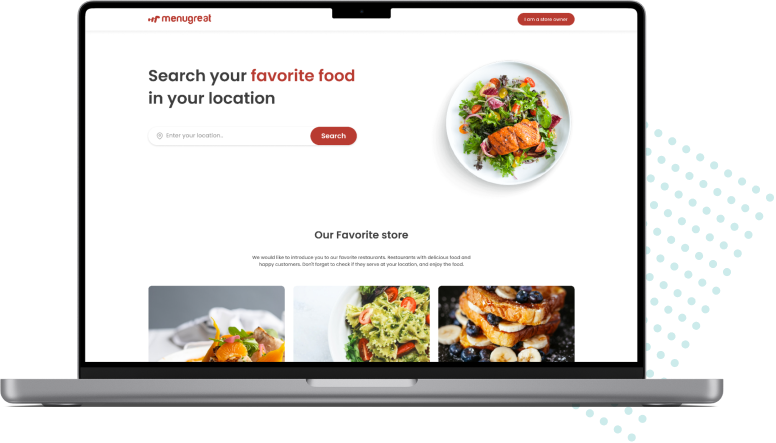
- The platform — an ordering system that connects to your POS. Menugreat is free and sends orders straight into ORO POS.
- Marketing — the real cost. Nobody visits your site by accident.
On a $30 order, direct ordering costs roughly $0.90 in processing against $7.50 in commission. The gap funds a great deal of marketing. Our guide to online ordering management systems covers how to set the channel up, and POS and website integration covers connecting it to your existing system.
Negotiating third party delivery commission
Commission rates are less fixed than they appear, particularly once you have volume history. Restaurants that ask are frequently offered better terms than restaurants that do not, and there are several levers beyond the headline rate:
- Move to a lower tier. If you have drivers, switch to restaurant-delivered and drop roughly ten points.
- Ask for a new-restaurant or promotional rate to be extended. These are routinely renewed on request.
- Negotiate collection separately. Paying full delivery commission on a collection order is the least defensible line on the statement.
- Question sponsored placement. Track whether paid promotion produced repeat customers or one-off discount hunters.
Come to the conversation with your own numbers — monthly order count, average value, and how long you have been on the platform. Third party delivery commission is a negotiated rate for large accounts and a default one for everybody else, and the difference between those two is a phone call.
The number to actually track
Stop looking at commission as a percentage and start tracking margin per order by channel. Work out, for each channel, what is left after food, packaging, commission and processing.
Most operators who do this once discover that marketplace delivery is close to break-even, and that it is subsidised by their dine-in trade. That is not automatically a reason to stop — break-even volume that keeps a kitchen busy and reaches new customers has value. But it should be a decision you have made deliberately, not one the commission structure made for you.
If you want somewhere to start, run the numbers on last month. Total marketplace revenue, minus food cost, minus packaging, minus commission. Compare it with the same calculation on your dine-in and direct orders. The answer usually settles the strategy question on its own.
Do the same calculation again in three months. Marketplace terms change, promotional rates expire, and the mix of delivery to collection shifts with the seasons. A restaurant that reviews its channel margin quarterly stays in control of the relationship; one that signed up years ago and never looked again is being priced by default.
None of this is an argument against delivery. Delivery brought a great many restaurants through some very lean years, and marketplace reach is genuinely hard to replicate. It is an argument for knowing the number, so that the decision about how much volume to route through third party delivery commission is yours to make rather than one you inherit.