 +1 (800) 844-6603
 Follow Us






A POS system with website integration solves the critical challenge of disconnected sales and inventory systems. Many retailers suffer from revenue loss due to mismatched stock levels, delayed manual updates, and fragmented customer experiences. However, a fully integrated solution bridges these gaps by unifying your physical store and digital storefront in real time.
This guide explores how this technology transforms daily operations through Omnichannel sync, Unified inventory, and Real-time stock tracking. By centralizing data, businesses eliminate overselling risks, automate fulfillment, and gain holistic insights into performance, ensuring a seamless, professional journey for every customer across all channels.

What Is a POS System with Website Integration?
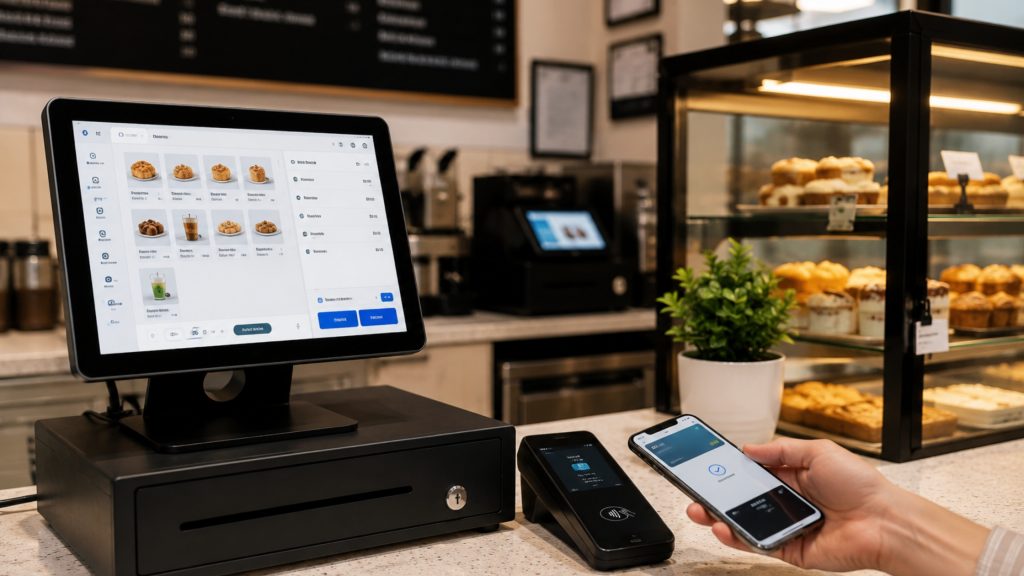
A pos system with website integration connects your in-store POS with your eCommerce website, allowing both platforms to share the same data instantly. This means every sale, return, or inventory update reflects across all channels without manual input. Therefore, business owners gain full control over operations while improving efficiency. Moreover, this system uses Cross-platform POS technology to ensure seamless communication between devices, platforms, and sales channels.
Why Businesses Need Integrated POS Solutions
Disconnected systems create operational gaps, causing errors, delays, and lost opportunities. An integrated solution removes these barriers while improving accuracy, consistency, and speed.
Key Benefits Include:
- Improved Accuracy: Real-time updates reduce manual errors.
- Better Customer Experience: Customers see accurate product availability.
- Faster Decision-Making: Data insights improve business strategies.
- Reduced Operational Costs: Automation minimizes manual work.
Therefore, adopting a unified system becomes essential for sustainable growth, stronger accuracy, smoother operations, and better customer experiences. Learn more about Best POS System for Restaurants.
How Omnichannel Sync Drives Seamless Retail Performance
Omnichannel sync connects every sales channel into one unified system. As a result, businesses deliver consistent experiences, reduce operational errors, and improve efficiency across both online and offline environments.
1. Real-Time Channel Coordination
Omnichannel sync ensures every transaction reflects instantly across platforms. Therefore, inventory, pricing, and availability stay accurate, which prevents overselling and maintains consistency across both physical stores and digital channels.
2. Unified Customer Experience
Customers receive the same experience regardless of where they shop. Consequently, consistent pricing, availability, and service build trust, improve satisfaction, and encourage repeat purchases across multiple sales touchpoints.
3. Centralized Data Visibility
All sales and inventory data remain accessible in one system. As a result, businesses gain better insights, improve decision-making, and respond quickly to demand changes without relying on manual updates.
4. Flexible Fulfillment Options
Omnichannel sync enables services like click-and-collect and hybrid delivery models. Therefore, businesses meet customer expectations while improving convenience, speed, and overall shopping experience across all platforms.
Omnichannel sync transforms operations by connecting every sales channel into one system. Consequently, businesses improve accuracy, enhance customer trust, and create a seamless, efficient retail experience.
Cross-Platform POS for Flexible Store Operations
A Cross-platform POS system runs smoothly across desktops, tablets, and mobile devices while keeping every sales point connected.
This flexibility helps businesses manage transactions in different settings. For example, staff can process orders quickly on mobile devices during busy hours.
Moreover, Cross-platform POS delivers consistent performance across platforms. Therefore, businesses maintain speed, reliability, and smoother daily operations.
Additionally, this technology supports growth. As your business expands, the system adapts without requiring major changes.
Key Features to Look for in an Integrated POS System
Choosing the right system requires careful evaluation. Therefore, focus on features that support long-term growth.
Essential Features:
- Automated Inventory Updates: The system should update stock levels automatically after every transaction.
- Multi-Channel Sales Tracking: Track sales across online and offline channels in one dashboard.
- Data Analytics and Reporting: Access detailed reports to make informed business decisions.
- Secure Payment Processing: Ensure safe and reliable transactions across all platforms.
- Integration Capabilities: The system should connect easily with your website and other tools.
These features ensure smooth operations and long-term efficiency.
How Website Integration Improves Customer Experience
Website integration connects browsing, checkout, inventory, and fulfillment for a smoother, more reliable customer experience.
- Accurate availability reduces customer confusion.
- Faster checkout saves shopping time.
- Flexible pickup improves buying convenience.
- Consistent pricing builds customer trust.
Website integration improves customer satisfaction by making every step faster, clearer, and more consistent across online and offline channels.
Business Growth Through Data-Driven Insights
An integrated POS system turns daily sales data into a clear business direction. As a result, owners can plan smarter and grow with confidence.
- Customer Behavior: Shows buying patterns, preferences, and repeat purchase opportunities clearly.
- Sales Trend Analysis: Identifies top products, peak seasons, and stronger revenue opportunities.
- Better Inventory Planning: Helps businesses stock smarter and reduce unnecessary financial risks.
- Confident Decision-Making: Supports expansion plans using accurate, real-time business performance data.
Data-driven insights help businesses reduce guesswork, improve planning, and make stronger growth decisions.
Common Challenges Without Integration
Businesses that lack integration face several challenges that affect inventory accuracy, sales performance, customer experience, and overall operational efficiency.
- Inventory mismatches across platforms.
- Delayed updates are causing stock errors.
- Poor customer experience.
- Increased manual workload.
- Limited data visibility.
However, a pos system with website integration eliminates these issues effectively.
Future of POS Systems with Website Integration
Retail growth will depend more on connected, automated systems. Therefore, businesses that adopt integration early can improve efficiency and stay competitive.
- Integrated solutions will create smoother operations and stronger customer experiences.
- AI and automation will support smarter inventory control and forecasting.
- Rising customer expectations will make seamless integration more essential.
The future belongs to businesses that connect their sales, inventory, and customer data through one reliable system.

Conclusion
A pos system with website integration transforms how businesses manage sales, inventory, and customer experience. It connects all operations into a single, efficient system. With features like Omnichannel sync, Unified inventory, Real-time stock, and Cross-platform POS, businesses eliminate inefficiencies and improve performance. If you want to streamline operations, reduce errors, and scale your business, adopting this solution becomes crucial. For businesses looking for a reliable and scalable solution, Orocube POS provides advanced integration capabilities designed to support long-term growth and operational excellence.